Discover Iconic Cities and Hidden Gems: Tokyo to Osaka
Exclusive — prices from Solo exclusive — from

Ports of Call & Itinerary
20-night voyage departing Tokyo, arriving Osaka.
Route Map
Discover Iconic Cities and Hidden Gems: Tokyo to Osaka
21 ports plotted · click a marker for details
Day 1
Tokyo , Japan
Thursday, 30 Mar 2028
Lights, sushi, manga! Sprawling, frenetic, and endlessly fascinating, Japan’s capital is a city of contrasts. Shrines and gardens are pockets of calm between famously crowded streets and soaring office buildings. Mom-and-pop noodle houses share street space with Western-style chain restaurants and exquisite fine dining. Shopping yields lovely folk arts as well as the newest electronics. And nightlife kicks off with karaoke or sake and continues with techno clubs and more. Whether you seek the traditional or the cutting edge, Tokyo will provide it.
Day 2
Shimizu , Japan
Friday, 31 Mar 2028
The salt and pepper cone of Japan's most famous natural landmark won’t fail to take your breath away, as it soars into the sky in a vision of spectacular symmetry. Make sure your camera is fully prepared before you dock in Shimizu’s port, where unparalleled views of the extraordinary Mount Fuji’s dramatic peak await. Take your time to soak up one of Japan's most iconic views, before dipping your toes into the rest of what this destination of tranquil temples has to offer. While there’s a bustling fish market, and a charming amusement park waiting close to the port, most new arrivals immediately set off in pursuit of the best views of Mount Fuji, or to see the stunning panorama on offer from the heights of the Kunozan Toshogu Shrine. Take the cable car up to the top, to experience the tranquillity around the forested shrine, and to enjoy its stunning architecture of deep scarlets and gleaming golds. You can also enjoy heart-stopping views out over the Bay of Suruga, and the tea plantations below.
Day 3
Kumanoe , Japan
Saturday, 1 Apr 2028
Day 4
Kobe , Japan
Sunday, 2 Apr 2028
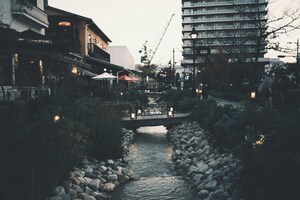
Located on the calm waters of the Inland Sea, Kobe has served as an important port town for hundreds of years. It was one of the first harbours to accept foreign traders in 1868 when Japan was just emerging from its centuries of isolation. What followed was a surge of Western trade and exports. Today, Kobe is quite multicultural, with expatriates from 98 different nations in residence, providing a cultural diversity most easily visible in restaurants serving every kind of cuisine, including the now world famous Kobe beef. The Great Hanshin Earthquake of 1995 set back Kobe’s development, but not for long. Kobe emerged more vibrant than before - with additional attractions, hotels and urban redevelopment, and only a few remnants of the extensive damage. It is a cosmopolitan place with lively shopping arcades, interesting museums, great restaurants, and a port that is still at the heart of things. Kobe is well known for its nightlife, in an intimate quarter of neon lights, cosy bars and sophisticated nightclubs. It also serves as the gateway to the ancient Japanese capitals of Kyoto and Nara.
Day 5
Kobe , Japan
Monday, 3 Apr 2028
Located on the calm waters of the Inland Sea, Kobe has served as an important port town for hundreds of years. It was one of the first harbours to accept foreign traders in 1868 when Japan was just emerging from its centuries of isolation. What followed was a surge of Western trade and exports. Today, Kobe is quite multicultural, with expatriates from 98 different nations in residence, providing a cultural diversity most easily visible in restaurants serving every kind of cuisine, including the now world famous Kobe beef. The Great Hanshin Earthquake of 1995 set back Kobe’s development, but not for long. Kobe emerged more vibrant than before - with additional attractions, hotels and urban redevelopment, and only a few remnants of the extensive damage. It is a cosmopolitan place with lively shopping arcades, interesting museums, great restaurants, and a port that is still at the heart of things. Kobe is well known for its nightlife, in an intimate quarter of neon lights, cosy bars and sophisticated nightclubs. It also serves as the gateway to the ancient Japanese capitals of Kyoto and Nara.
Day 6
Uno , Japan
Tuesday, 4 Apr 2028
Day 7
Hiroshima , Japan
Wednesday, 5 Apr 2028
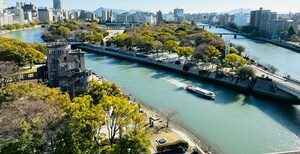
History buffs will want to write home Hiroshima. Despite being devastated in 1945, this Japanese city is known to all for its commitment peace – its ruin on the 6th August 1945 led to the end of the war and today, the Peace Memorial (a UNESCO World Heritage Site) , is a constant reminder of the destruction that war brings. A walk in the leafy boulevards of Peace Memorial Park brings quiet contemplation. The Flames of Peace – set in the park’s central feature pond – burn brightly and will continue to do so until all the nuclear bombs I the world have been destroyed. There are many other inspiring messages of hope around the city too; the Children’s’ Peace Monument just north of the park is a homage to little Sadako Sasaki, who was just two in 1945. When she developed leukemia in 1956, she believed that if she folded 1,000 paper cranes – a symbol of longevity and happiness in Japan – she would recover. Sadly she died before she finished her task but her classmates finished the rest. It is impossible to ignore the events of 1945 in Hiroshima, but this is far from a depressing place. The great efforts that have been made in rebuilding of the city over the years have given Hiroshima a vibrant, eclectic edge, with the downtown shopping area and street food stalls being well worth a visit. The proximity to Miyajima and its iconic, impressive, Torii gate should not be overlooked either. If you are lucky enough to visit during the unpredictable and short-lived Sakura (cherry blossom) season, then the extraordinary sight of the delicate pink blossom floating across the water to the red gate, means you can consider yourself one of the luckiest people on the planet.
Day 8
Kitakyushu , Japan
Thursday, 6 Apr 2028

Day 9
Fukuoka , Japan
Friday, 7 Apr 2028
Day 10
Hagi , Japan
Saturday, 8 Apr 2028
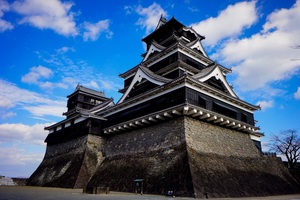
Hagi is a former castle town located in the middle of Yamaguchi prefecture along the coast of the Sea of Japan. It is surrounded by the ocean, mountain and Abugawa River. Early in the 17th century, Terumoto Mori built Hagi Castle at the foot of Mt. Shizuki-yama, and the area served as the seat of the Yamaguchi prefecture government until the middle of 19th century. Around then, Hagi produced many capable men who played a leading role in the construction of modern day Japan, including Hirobumi Ito who became the first prime minister in Japan. You will still see a castle town itself which was built 400 years ago and you can get the feel of how it was like during the Samurai period. During your visit, we recommend experiencing the Hagi-yaki pottery which was brought from Korea in the early 17th century. Its colour is very unique and changes over time due to its porous nature. You can find many craft shops specialized for Hagi-yaki pottery all over the town. Last but not least, do not forget that Hagi is also famous for summer tangerines, and there are several shops which sells soft ice cream with summer tangerine flavour.

Day 11
Busan , South Korea
Sunday, 9 Apr 2028
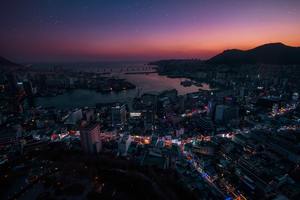
White-sand city beaches and hot-spring resorts may not be everyone's first image of Korea, but these are what Koreans flock to Busan for all year. And there are plenty of opportunities for rest, relaxation, retail therapy, and even a touch of glamour every October with the Busan International Film Festival. Busan's beaches are the big summertime draw but there is plenty to be seen year round. Quintessential experiences include taking some rest and relaxation at a local spa and exploring the Beomeosa temple complex.
Day 12
Tsushima , Japan
Monday, 10 Apr 2028
Day 13
Nagasaki , Japan
Tuesday, 11 Apr 2028
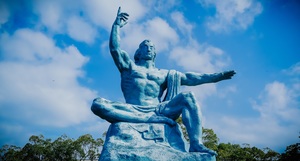
Nagasaki city has developed into one of the most important port cities in Japan. During Japan’s period of isolation in the 17th century, Nagasaki played a prominent role in foreign trade relation and only a very few ports were open to restricted numbers of foreign traders. Even though Holland was a major country who conducted trading during this period, Dutch people were only allowed to stay in Dejima Island and were not allowed to have contact with the Japanese people. Today, you will still find the strong influence of Dutch and Chinese culture in the city which is very different from all other cities in Japan. In the more recent history, Nagasaki became the second city after Hiroshima to be destroyed by an atomic bomb towards the end of World War II. From the visit to Atomic bomb museum and peace memorial park, people could understand how chaotic the situation was and the agony that the people in the days have experienced from the damage inflicted by the atomic bomb. It continues to appeal to the world with their wish for world peace.
Day 14
Kagoshima , Japan
Wednesday, 12 Apr 2028
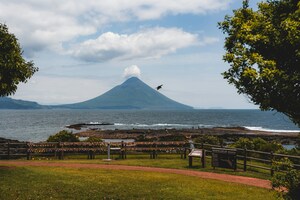
Kagoshima city is the capital of Kagoshima prefecture and also Kyushu’s southernmost major city. This city is often compared to its Italian sister city Naples, due to its’s similarities such as mild climate and active volcano, Sakurajima. Sakurajima is one of the most renowned active volcanos not only in Japan but also in the whole entire world. This smoking Sakurajima is centred in Kinko Bay and is one of the main symbols of this prefecture. We cannot talk about Sakurajima without the history of continuous eruption. Sakurajima used to be an isolated island; however, the land has banded together with Osumi peninsula from the eruption in 1914. You may have a chance to see the smoke coming from the top of Sakurajima depending on the weather condition. Not only does the scenery of Sakurajima represent the beauty of Kagoshima City but Senganen garden is also symbolic to elegance in the Kagoshima region. This Japanese garden was constructed by a feudal lord, Mitsuhisa Shimazu, as a guest house of the Kagoshima castle which attracts many visitors for its splendid view.
Day 15
Aburatsu , Japan
Thursday, 13 Apr 2028
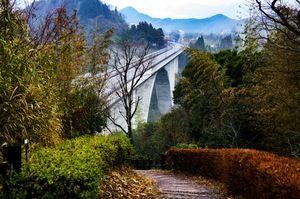
Located on the south eastern side of Japan, Aburatsu is a tiny port that packs a big punch. More commonly known under the name of Miyazaki – the region where Aburatsu is found, the clement weather and fortuitous topography give Aburatsu a feeling of being on permanent holiday. Visitors should expect along with warm weather a warm welcome from the locals with samples of local culture – such as the traditional Nichinan Taihei dance being performed and bites of exquisite gastronomy for the more adventurous as soon as you disembark. Venturing further afield and one discovers an atypical town that is light years away from the Japan of the future that one might associate other parts of the country with. On the do not miss list should be first and foremost Aoshima, a tiny island of just 1.50km in circumference, connected to the mainland by a 300-metre long bridge. Not to be confused with an identically named island in Ehime Prefecture which is known for its cat population, those with allergies to felines need not worry! Celebrated for its lush vegetation, the island is ringed with white sandy beaches and shallow waters. At the center of the island is Aoshima Jinja, a colorful shrine set back in the jungle that is said to bring luck to married couples. Surrounded at low tide by the geological phenomenon known as Oni no Sentakuita (eroded sandstone and shale boulders) that protrude from the sea between the waves, the straight rows of basalt rock look man made. Because of this, Aoshima is designated a National Natural Monument. Finally, Obi Castletown is a definite must see. A highly impressive traditional castle, the gardens have a cherry tree orchard that is a fine example of Sakura, should you be lucky enough to visit in Spring.
Day 16
Uwajima , Japan
Friday, 14 Apr 2028

Day 17
Beppu, Kyushu Island, Oita , Japan
Saturday, 15 Apr 2028

Day 18
Matsuyama , Japan
Sunday, 16 Apr 2028

Day 19
Takamatsu , Japan
Monday, 17 Apr 2028
Takamatsu city is the capital of Kagawa prefecture which is Japan’s smallest prefecture. This city is a vibrant blend of natural beauty and cosmopolitan functionality with a population of 420,000 people. The port of Takamatsu used to be the main gateway to Shikoku Island until the opening of the 37km long Seto Ohashi Bridge in 1988. Takamatsu city has flourished along with the Seto Inland Sea since 17th century when Matsudaira family, the relatives of the Tokugawa Shogun, ruled this area. Matsudaira family has completed the famous Japanese “Ritsurin Garden”. It took more than 100 years to complete this spacious garden with 75 hectares of land which features 13 landscaped hills, 6 ponds and many stone arrangements that have been placed in perfect balance in front of a vast green vista of Mt. Shiun. This garden was constructed as a villa of Matsudaira family and it attracts many visitors from all over the world. Furthermore, Takamatsu is a great place to find fresh seafood, its product, and famous Sanuki Udon noodles.

Day 20
Himeji , Japan
Tuesday, 18 Apr 2028

Day 21
Osaka , Japan
Wednesday, 19 Apr 2028
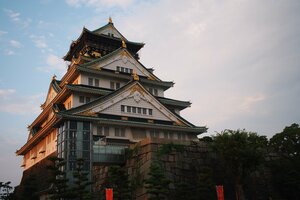
From Minami's neon-lighted Dotombori and historic Tenno-ji to the high-rise class and underground shopping labyrinths of Kita, Osaka is a city that pulses with its own unique rhythm. Though Osaka has no shortage of tourist sites, it is the city itself that is the greatest attraction. Home to some of Japan's best food, most unique fashions, and warmest locals, Osaka does not beg to be explored—it demands it. More than anywhere else in Japan, it rewards the impulsive turn down an interesting side street or the chat with a random stranger. People do not come here to see the city, they come to experience it.Excluded from the formal circles of power and aristocratic culture in 16th-century Edo (Tokyo), Osaka took advantage of its position as Japan's trading center, developing its own art forms such as Bunraku puppet theater and Rakugo comic storytelling. It was in Osaka that feudal Japan's famed Floating World—the dining, theater, and pleasure district—was at its strongest and most inventive. Wealthy merchants and common laborers alike squandered fortunes on culinary delights, turning Osaka into "Japan's Kitchen," a moniker the city still has today. Though the city suffered a blow when the Meiji government canceled all of the samurai class's outstanding debts to the merchants, it was quick to recover. At the turn of the 20th century, it had become Japan's largest and most prosperous city, a center of commerce and manufacturing.Today Osaka remains Japan's iconoclastic metropolis, refusing to fit Tokyo's norms and expectations. Unlike the hordes of Tokyo, Osakans are fiercely independent. As a contrast to the neon and concrete surroundings, the people of Osaka are known as Japan's friendliest and most outgoing. Ask someone on the street for directions in Tokyo and you are lucky to get so much as a glance. Ask someone in Osaka and you get a conversation.The main areas of the city, Kita (north) and Minami (south), are divided by two rivers: the Dojima-gawa and the Tosabori-gawa. Between Kita and Minami is Naka-no-shima, an island and the municipal center of Osaka. Kita (north of Chuo Dori) is Osaka's economic hub and contains Osaka's largest stations: JR Osaka and Hankyu Umeda. The area is crammed with shops, department stores, and restaurants. Nearby are a nightlife district, Kita-shinchi; Naka-no-shima and the Museum of Oriental Ceramics; Osaka-jo (Osaka Castle); and Osaka Koen (Osaka Park). Restaurants, bars, department stores, and boutiques attract Osaka's youth to Minami (south Chuo Dori); theatergoers head to the National Bunraku Theatre and electronics-lovers to Den Den Town. For a glimpse of old Osaka, visit Tenno-ji Temple and Shin Sekai. The main stations are Namba, Shin-sai-bashi, Namba Nankai, and Tenno-ji. There's easy access to the Municipal Museum of Fine Art and Sumiyoshi Taisha (Sumiyoshi Grand Shrine).The bay area, to the west of the city center, is home to the Osaka Aquarium and Universal Studios Japan. The Shinkansen stops at Shin-Osaka, three stops (about five minutes) north of Osaka Station on the Mido-suji subway line. To the north of Shin-Osaka is Senri Expo Park.
Room Type & Prices
All exclusive prices per person based on double occupancy. Solo traveller prices — single occupancy. Contact our cruise experts for the latest availability and best fares.
Earlybird Discount
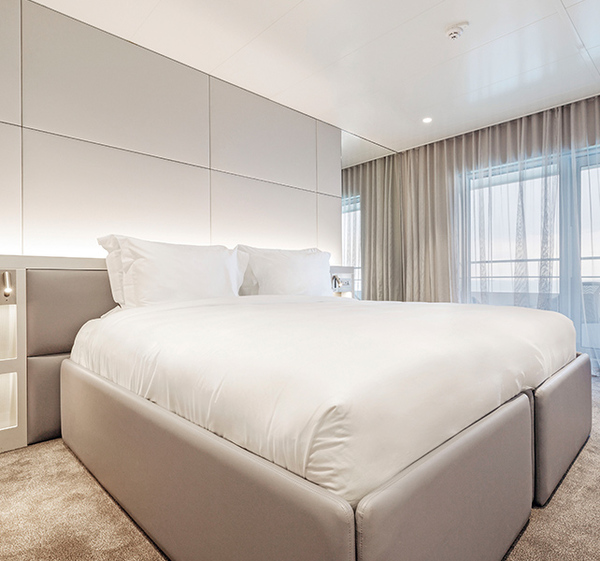
Balcony Suite
344 sqft · Up to 2 guests
Deluxe Balcony Suite
473 sqft · Up to 2 guests
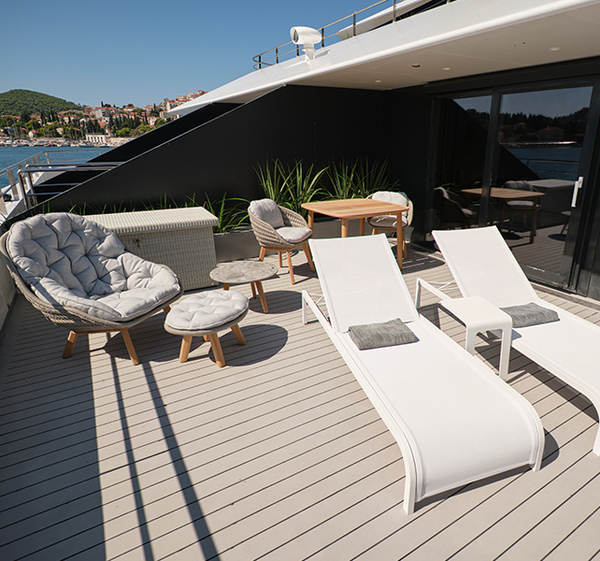
Yacht Suite
879 sqft · Up to 2 guests
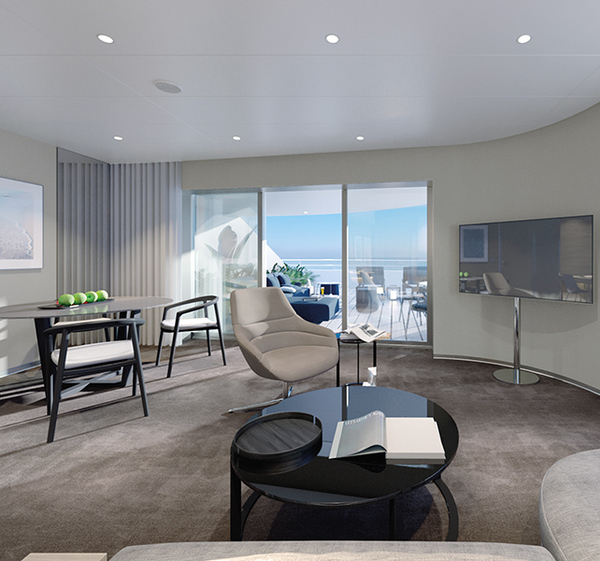
Owner's Suite
1407 sqft · Up to 2 guests

Oceanview Stateroom
226–247 sqft · Up to 2 guests
Terrace Suite
Up to 2 guests
Suite
More Departures
24 nights
Eastern European Escapade & Splendours of Europe
9 Sep 2026
Solo From
£12,733
From
£7,487
9 nights
Spanish Shores & Beyond
10 Sep 2026
Solo From
£12,708
From
£6,354
10 nights
Zurich - Lucerne & Jewels of the Rhine
10 Sep 2026
Solo From
£7,938
From
£4,347
22 nights
Discover the Rhine, Main & Danube rivers
11 Sep 2026
Solo From
£15,751
From
£8,398
10 nights
Enchantment of Eastern Europe with Budapest and Bucharest
11 Sep 2026
Solo From
£6,436
From
£3,426
8 nights
Enchantment of Eastern Europe
11 Sep 2026
Solo From
£6,577
From
£3,464
Your Ship
Emerald Xara
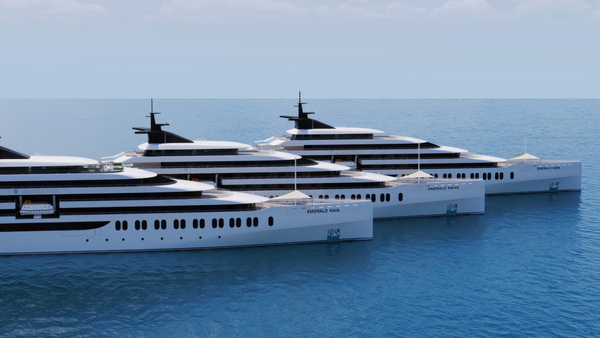
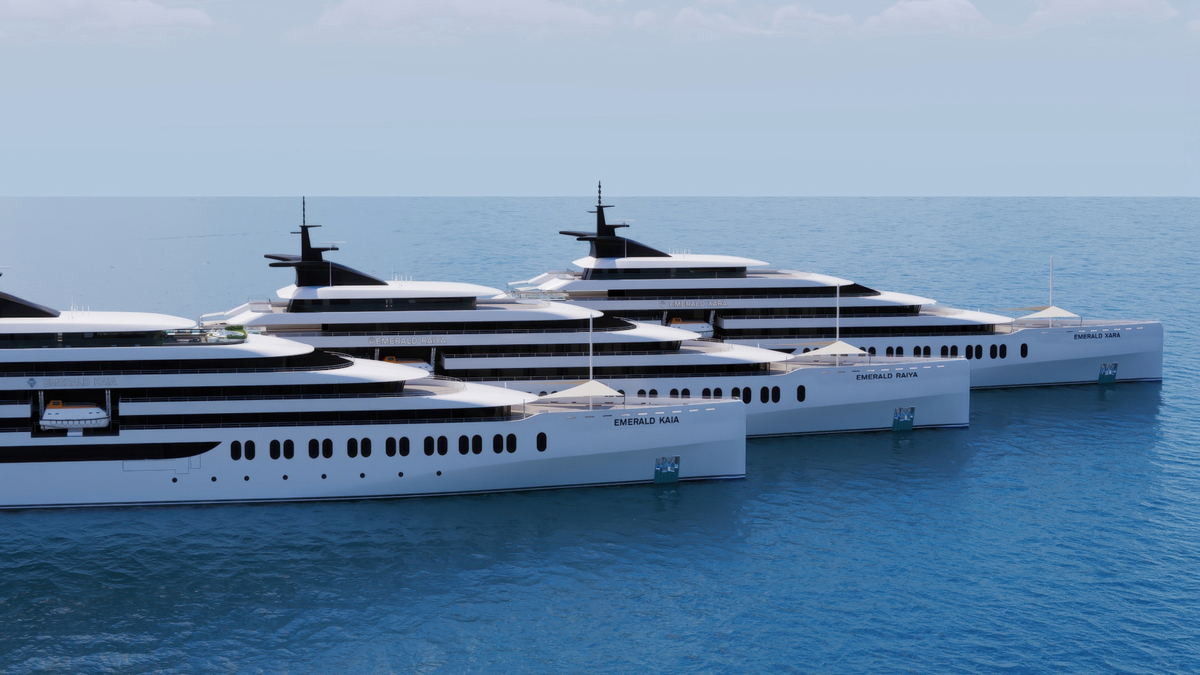
Launching in 2028, Emerald Xara will introduce a new dimension of luxury yacht cruising across Asia, Australia and the South Pacific, becoming the first Emerald Yacht to explore these regions. She will embody the same sleek design and on board experience as Emerald Kaia. More details will be revealed soon. Stay informed by signing up below to receive our announcements.